


Weekly News! 16.1.26
Weekly News – 16.1.26
What a wonderful week we have had! Take a look at all the exciting learning and activities our Year 1 children have been up to… 😊
Maths
This week, we focused on place value.
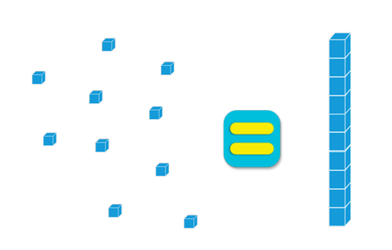
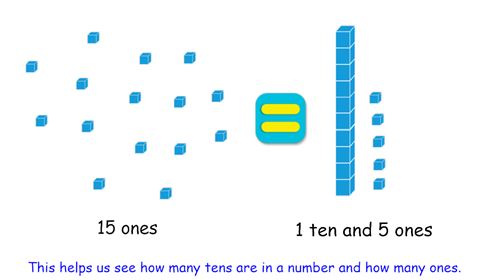
On Monday, we used a tens frame to explore how counting on from ten makes numbers easier to understand. For example, the number 15 looks like this: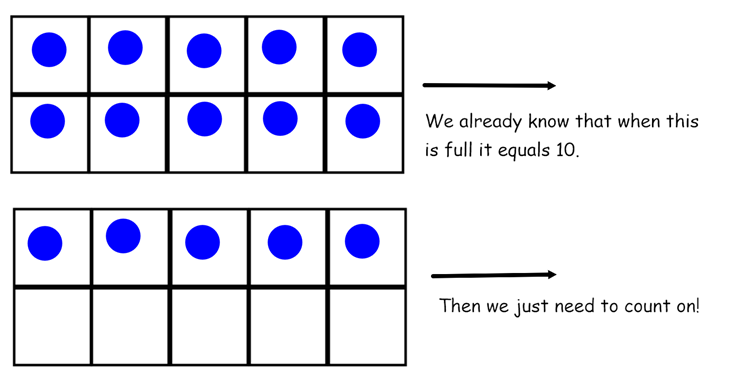
We already know there is a full ten, so we only need to count on 5 more.
We also explored fair exchanging with base ten. By swapping ten ones for a tens stick, we practiced making other two-digit numbers. This helped the children understand how two-digit numbers can be split into tens and ones.
Next week: We will begin looking at addition and subtraction!
Fact of the Week
Each week, we will share a key maths fact. This week, we are learning:
Addition Facts:
-
8 + 2 = 10
-
2 + 8 = 10
Related Subtraction Facts:
-
10 − 8 = 2
-
10 − 2 = 8
Read, Write Inc. (RWI)
This week, the children have shown great enthusiasm as we revisited previously taught sounds and strengthened their phonics reading skills. It has been wonderful to see their engagement in learning!
We have focused on several key areas, including identifying “special friends,” which are groups of letters that make a single sound. The children have also been practising Fred Talk, blending, and segmenting words, which are essential skills for reading. Additionally, they have been reading green words and learning some red (tricky) words.
To support your child’s learning at home, you can help by spotting “special friends” in everyday words, blending sounds together to read full words, and practising regularly for an extra boost. We have also been concentrating on handwriting, ensuring that the children are using capital letters correctly, forming letters carefully, and placing full stops to complete sentences.
We have also been continuing ‘Storytime’ three times a week, where children have been practising and developing their writing and oracy skills. During these sessions, we will focus on using adjectives, punctuation and a wider range of vocabulary to improve their sentences and storytelling.
Since returning from the Christmas break. We have been exploring the non-fiction text “Wash Your Hands” by Angela Royston, which has sparked a wonderful discussion about the importance of hand hygiene and links wonderfully into our new thematic topic.
In our lessons, we have been practising speaking in full sentences to articulate why we wash our hands. The children have also been writing simple sentences, ensuring they use capital letters and full stops. It’s been delightful to see them express their thoughts about those pesky germs that can make us unwell! Additionally, we have discussed various times when we should wash our hands, reinforcing this essential habit.
To further enhance our understanding, we conducted a fun germ experiment. We added pepper to a bowl of water, and when Mrs Winchcombe placed her dirty finger in the bowl, the pepper remained still. However, after washing our hands, we repeated the experiment, and the pepper moved away, demonstrating how soap effectively eliminates germs! The children then wrote their own scientific reports on what they observed, showcasing their learning in a creative way.
Please look on our classroom door for the video passwords 😊
Telling off germs – making sure we use the work ‘because’
https://vimeo.com/1151595616?share=copy&fl=sv&fe=ci
https://vimeo.com/1151595653?share=copy&fl=sv&fe=ci
https://vimeo.com/1151595556?share=copy&fl=sv&fe=ci
Explaining our germ experiment!
https://vimeo.com/1153612256?share=copy&fl=sv&fe=ci
Reading at Home
-
Children will bring home two books each week:
-
RWI Home Book – should be read three times a week for fluency. Changed every Monday by an adult.
-
Book with coloured sticker – children can change independently, ideally in the morning.
-
-
Please ensure reading folders are placed in the trays at school.
-
Encourage your child to read at home and record it in their reading record.
-
Certificates are awarded weekly to celebrate reading achievements, and every 20 reads earns a special certificate!
If you have any questions, please speak to your child’s class teacher
Home Learning
This week we would love for you to practice your labelling skills. We would love for you to draw and label a body. If you would like to tell us more about each part that would be wonderful 😊
RSPB Big Garden BirdWatch
This term, the whole school is taking part in the Big Schools' BirdWatch to collect data for the RSPB. We are inviting you to take part at home too. Here's what you need to do:
1. Choose an hour between 23 and 25 January
2, Only record the birds that land in your garden
3. Record the highest number of each bird species you see at any one time
4. Sign up online and submit your results to the RSPB. Here's the link: Big Garden Birdwatch
Miss Isaac, who is Chilton's science leader, would love to see any photos of you doing this and also know any particularly interesting birds you saw. Feel free to send her an email: carol.isaac@chiltonprimary.co.uk
Have fun twitching!
Thematic
This week in our thematic lessons, we have embarked on a brand new topic titled ‘I Care About Me’. This topic focuses on the basic parts of the human body and identifies the parts used for our senses. Through our exploration of Edward Jenner, the children will learn about germs and their impact on our bodies. We will culminate this learning by creating a healthy dish, where the children will engage in activities such as cutting, peeling, and grating food.
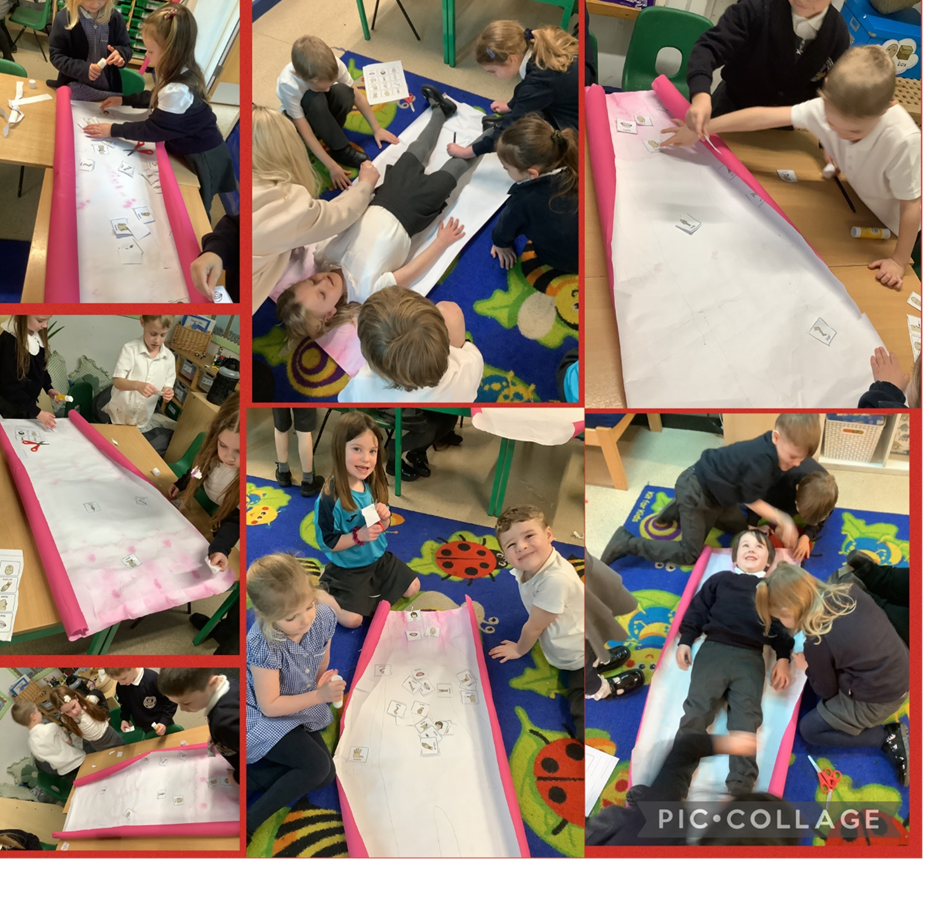
During our lessons, we have been addressing the big question: “What parts make up the human body?” The children had a fantastic time drawing around a peer at their table and labelling the body parts. Interestingly, many of them were surprised to discover where their elbows, wrists, and ankles are located! We also discussed the functions of each body part. In addition, we examined a picture of mouldy fruit, prompting questions such as “What is that?” and “Why has that happened?” We initiated a bread experiment that will continue over the next couple of weeks. The children touched a piece of bread straight after lunch, another piece after washing their hands, and left the last piece untouched. Over the coming weeks, we will observe and predict what we think will happen to each piece.
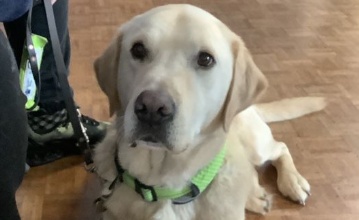
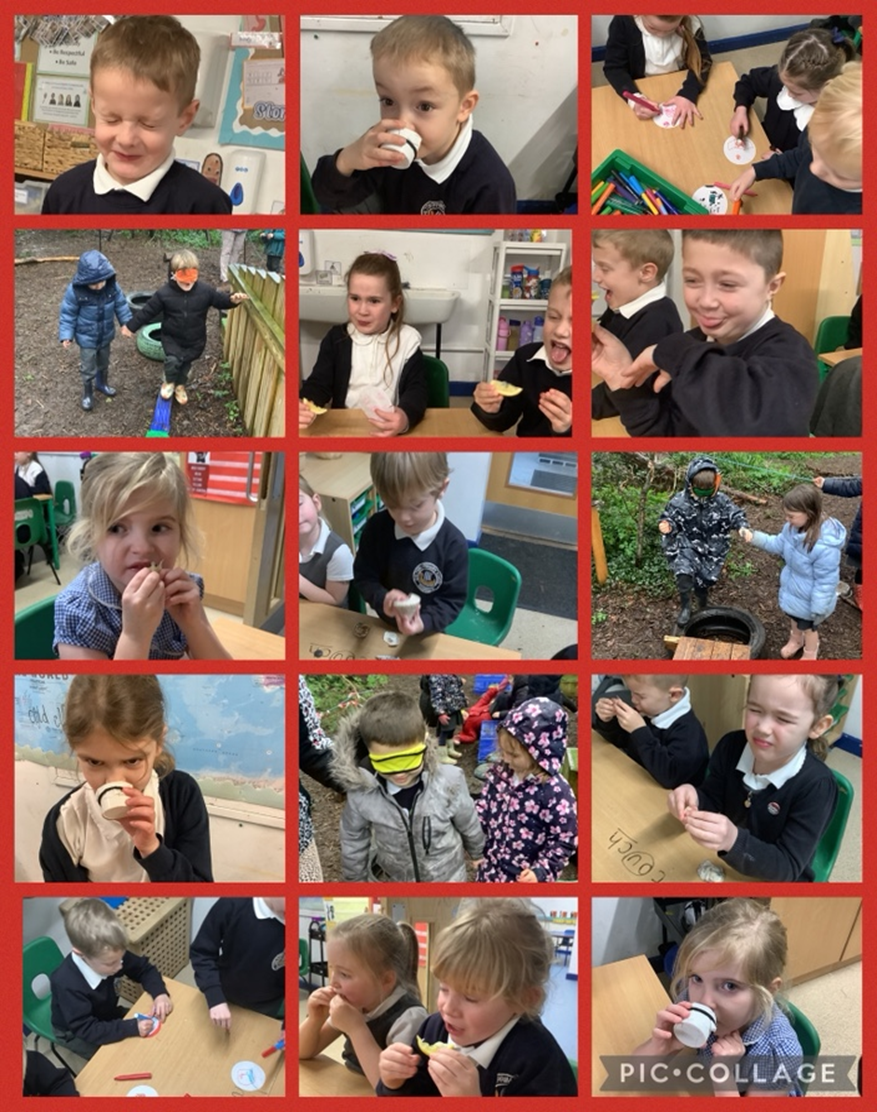
Furthermore, we have introduced a new big question: “Which parts of our bodies do we need to see, hear, smell, taste, and touch?” The children have been learning about the senses and the corresponding body parts responsible for each sense. They participated in various activities involving smelling, tasting, touching, and listening to different objects, guessing what they were before revealing the answers. We were also fortunate to have a visit from guide dogs, who taught us about the importance of senses and how they are relied upon by some individuals. We had the best time meeting the lovely Rufus and asked some wonderful questions.
As we continue with this engaging topic, please feel free to discuss these lessons with your children at home. Encouraging them to share their thoughts and discoveries will enhance their learning experience. If you have any questions or would like to know more about our activities, do not hesitate to reach out.
 Additional Information