




Weekly News! 2.10.26
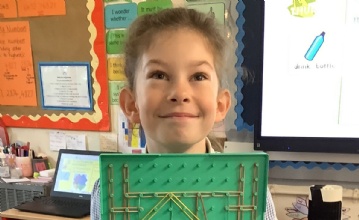
What a fantastic week we have had! The children have worked incredibly hard, embraced their learning and shown great enthusiasm across all of our lessons. It has been wonderful to see their confidence grow as they continue to learn, explore and challenge themselves.
Maths
This week in Maths, we have been developing our mental addition strategies. We have been using Think 10, where we bridge to the next multiple of 10 and then add the remainder.
For example, when solving 38 + 8, we know that 38 needs 2 more to make 40. We then add the remaining 6:
38 + 2 = 40
40 + 6 = 46
We have also been using the near doubles strategy to help us solve addition calculations mentally and efficiently.
After developing our addition skills, we moved on to subtraction using partitioning. We have been learning to partition a number into tens and ones to make subtraction easier. For example:
85 − 23
85 − 20 = 65
65 − 3 = 62
We have been working hard to explain the mental strategies we use and are becoming more confident in choosing an efficient method to solve calculations.
English
In English, we have continued reading The Iron Man by Ted Hughes. This week, we have been developing our descriptive writing by exploring a range of vocabulary and grammatical features.
We have used verbs and adverbs to describe the actions and movements of Iron Man and Hogarth. We have also explored similes to create vivid descriptions, as well as superlatives to make our descriptions more powerful.
We have also been using fronted adverbials to add detail about when, where or how something happened. We have enjoyed finding different ways to bring our descriptions of Iron Man and Hogarth to life!
Thematic
In Thematic, we have been investigating sound and exploring how the volume of a sound changes as we move further away from its source.
We carried out an experiment using an egg shaker. We listened to the sound at different distances, moving back 2 metres each time, and recorded our observations and results in a table.
Once we had collected our data, we used it to create a bar graph. This allowed us to clearly see the relationship between the distance from the sound source and how loud the sound was.
We really enjoyed carrying out the investigation and using our results to help us understand how sound travels!
Spellings
Spellings to practice this week for a test on Thursday are:
Quickly, slowly, happily, suddenly, excitedly, carefully, gently, build, suppose, various
Love to learn
Complete your own sound investigation. Choose 3-5 household objects that you can make a sound with.
-
How can I make the object make a sound?
-
What is vibrating to make the sound?
-
Can I change the sound? How?
-
What happens if I make the vibration faster or slower?
-
Can I make a sound louder or quieter?
They could use things such as:
-
elastic bands stretched around a box
-
a ruler hanging over the edge of a table
-
glasses or cups containing different amounts of water
-
a homemade drum using a container and paper
-
a comb and paper
-
a saucepan and wooden spoon